
On this page
- What are the main types of resistance bands?
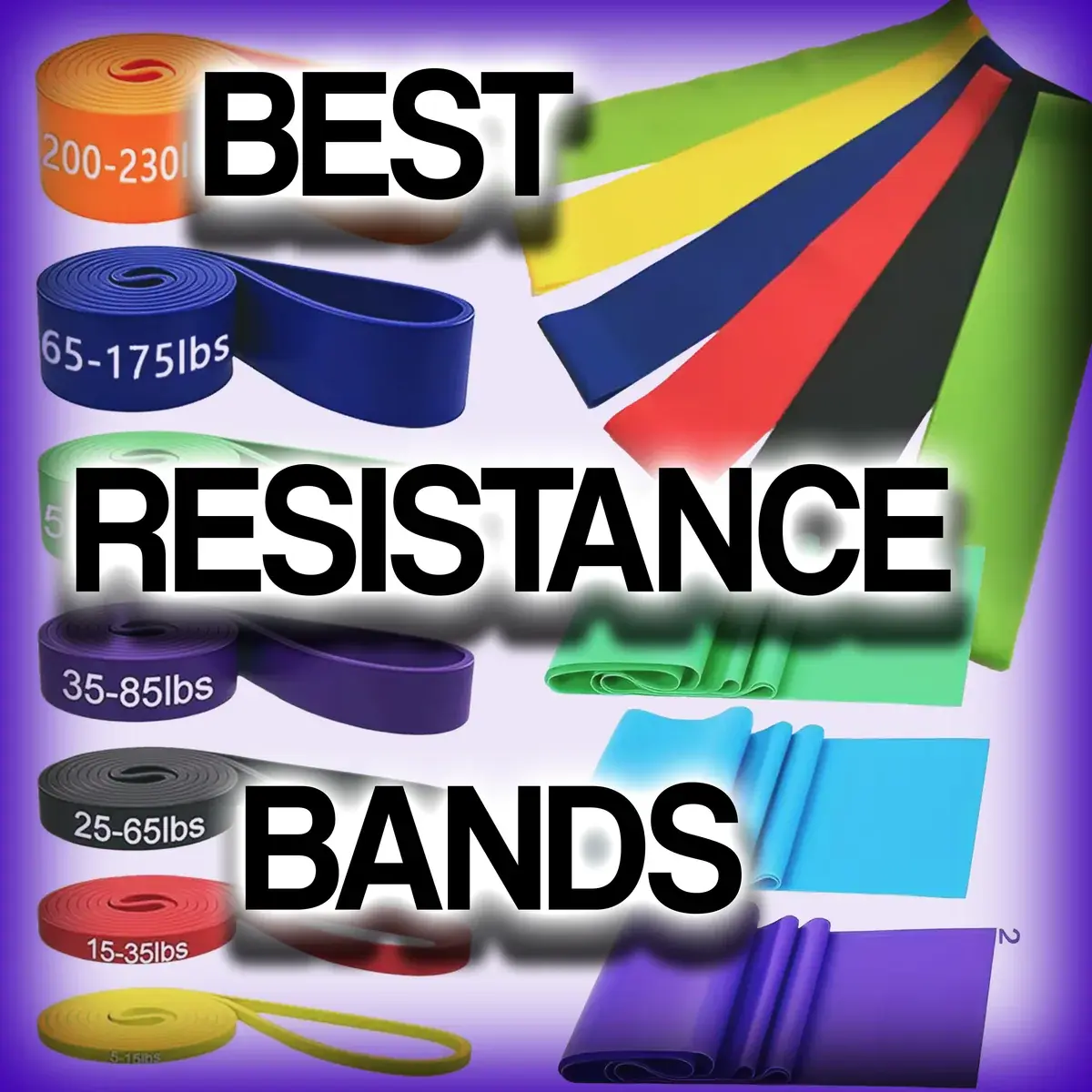
- Mini loop bands
- Tube bands with handles
- Long loop bands, also called pull-up assist bands
- Flat therapy bands
- Why do people use resistance bands?
- Which type of resistance band is best for most people?
- Which resistance bands should you buy?
- Best resistance bands for most people: long loop bands
- Best resistance bands for beginners: tube bands with handles
- Best mini loop bands for activation and travel: Fit Simplify
- Best resistance bands for rehab or light controlled work: THERABAND
- My actual recommendation
- FAQ
- Are loop bands better than tube bands?
- Are mini bands enough for a full workout?
- Which resistance bands are best for home workouts?
- How many resistance bands do I actually need?
Quick picks:
- Best resistance bands for most people: Serious Steel Fitness resistance bands.
- Best resistance bands for beginners: tube bands with handles: Bodylastics Basic Series resistance band set.
- Best mini loop bands for activation and travel: Fit Simplify Resistance Loop Exercise Bands
- Best resistance bands for rehab or light controlled work: THERABAND resistance bands on Amazon
Choose the type of resistance band that matches your training before choosing a brand. A random set may work, but still be a poor fit for your workouts.
Some bands are better for full-body strength training. Some are better for glute work and warm-ups. Some are better for rehab. Some are better if you just want an easy home workout setup that doesn't take up much space. So before you buy anything, it helps to know what each type is actually good at.
For most people, long loop bands are the best all-around option if you want versatility. Tube bands with handles are usually the easiest place to start if you're new. Mini loop bands are great for activation work and travel. Flat therapy bands make more sense for rehab and lighter resistance.
What are the main types of resistance bands?
There are four main types worth knowing about, and they do not all solve the same problem.
Mini loop bands
Mini loop bands are the small circular bands you usually see in glute workouts, warm-ups, and mobility routines.
These are useful for things like lateral walks, glute bridges, squat warm-ups, shoulder activation, and light lower-body work. They're cheap, portable, and easy to use.
Where they fall short is in full-body strength training.
You can do a decent amount with them, but they're not usually the best choice for rows, presses, bigger pulling movements, or anything where you want more resistance progression over time.
Mini bands are best thought of as a support tool, not your whole training setup.
Tube bands with handles
Tube bands with handles are what a lot of people picture when they think of resistance bands for home workouts.
They usually come with removable handles, a door anchor, and sometimes ankle straps. That setup makes them approachable. Presses, rows, curls, triceps work, and similar movements tend to feel more intuitive with handles than with loop bands.
The downside is that cheaper tube sets can feel a little flimsy. The attachments, handles, and clips are often where quality starts to matter. A decent set can be very useful. A bad set can get annoying fast.
Still, if you want the easiest on-ramp into band training, this is usually the category that makes the most sense.
Long loop bands, also called pull-up assist bands
These are the long continuous loop bands often used for assisted pull-ups, rows, presses, deadlift patterns, stretching, and banded bodyweight work. The calisthenics progressions show where band assistance can fit as you build toward harder bodyweight movements.
If you want the most versatility from one type of band, this is usually it.
They can work for strength training, assistance work, mobility, warm-ups, and home workouts. They also tend to give you a broader resistance range than mini bands, which makes them easier to keep using as you get stronger.
The tradeoff is that they're not always as beginner-friendly on day one. Some exercises take a little setup. Some people also prefer handles for comfort, especially on pushing movements.
But if you want one band type that can cover the most ground, long loop bands are usually the strongest place to start.
Flat therapy bands
Flat therapy bands are the simple flat strips you'll often see in rehab settings or very light resistance programs.
These work well for shoulder work, controlled mobility drills, rehab exercises, and lower-resistance movements where you want small jumps in difficulty.
They are not usually the best choice if your main goal is full-body strength training.
They're better when you want lighter resistance, more control, or a rehab-style tool instead of a full training system.
Why do people use resistance bands?
- First, they take up almost no space. That alone makes them useful for home workouts, apartment training, and travel.
- Second, they lower the barrier to getting started. A lot of people are more likely to train consistently when the setup is simple and the equipment doesn't dominate a room.
- Third, they can be more versatile than people expect. A good band setup can cover rows, presses, squats, hinges, curls, triceps work, mobility drills, and warm-ups without needing a rack, bench, or full dumbbell set.
They're also useful when you want lower-impact resistance or a way to add training volume without piling on more joint stress.
That does not mean bands replace everything. If your main goal is long-term maximal strength with heavy loading, free weights are still easier to progress with.
For a lot of people, the better question is whether resistance bands are enough to help them get stronger, train more consistently, stay active at home, or stop skipping workouts when they travel.
Resistance bands tend to be best for a few specific use cases.
- They work really well for home workouts in small spaces. You can get a lot done without dedicating a room to equipment.
- They also work well for beginners who want something simpler than jumping straight into barbells or a full dumbbell setup.
- They're especially useful for warm-ups and activation work. That's one reason mini bands and lighter loop bands show up so often in gym bags.
- Travel workouts are another obvious win. A band set is one of the few strength tools you can throw in a backpack and actually use.
- And for rehab or lighter controlled resistance, flat therapy bands still have a clear place. That is one area where the lighter, simpler design is actually the point
Which type of resistance band is best for most people?
Long loop bands are usually the best overall choice for most people.
They're the most versatile, they offer a wider range of resistance, and they make more sense if you want one band type that can cover strength work, mobility, assistance work, and general home training.
- If you are brand new and want the easiest learning curve, tube bands with handles are probably the better buy.
- If you mainly want glute activation, warm-ups, and a compact travel option, mini loop bands make more sense.
- If you're buying bands for rehab or very light resistance work, flat therapy bands are the better fit.
Which resistance bands should you buy?
Match the band to the job you need it to do.
Best resistance bands for most people: long loop bands
If you want one style that gives you the most flexibility, start here.
Long loop bands tend to be the best buy for people who want real workout variety. They work well for assisted pull-ups, rows, presses, hinges, mobility work, and progressive home training.
A solid option in this category is Serious Steel Fitness resistance bands.
Buy these if you want one band type that can do the most.
Skip them if you know you strongly prefer handles or want a simpler beginner setup.
Best resistance bands for beginners: tube bands with handles
If you want a setup that feels more intuitive right away, tube bands with handles are usually the easiest starting point.
They make presses, rows, curls, triceps work, and door-anchor exercises feel familiar. That can make the difference between using your bands and leaving them in a drawer.
A straightforward option here is the Bodylastics Basic Series resistance band set. It currently lists the Basic Series set with handles, ankle straps, a door anchor, and multiple bands.
Buy these if you want a beginner-friendly setup and a more cable-machine-style feel at home.
Skip them if your main goal is pull-up assistance or you want the cleanest, simplest setup possible.
Best mini loop bands for activation and travel: Fit Simplify
Mini loop bands are not the best one-and-done option for most full-body training, but they are excellent for activation work, glute training, warm-ups, and travel.
If that's what you want them for, a simple set like Fit Simplify Resistance Loop Exercise Bands makes sense.
Buy these if you want a low-cost support tool that's easy to keep in a gym bag or suitcase.
Skip them if you're hoping one set of mini bands will cover all your strength training needs.
Best resistance bands for rehab or light controlled work: THERABAND
If you're buying bands for rehab, shoulder work, or lighter controlled resistance, flat therapy bands still make the most sense.
THERABAND remains one of the more recognizable options in that lane, and Amazon currently shows both standard and non-latex versions in the category. THERABAND resistance bands on Amazon are the kind of option that fit this use case well.
Buy these if you want lighter resistance, rehab-style progressions, or a more controlled training feel.
Skip them if your goal is full-body strength training with heavier resistance.
My actual recommendation
For a lot of people, the smartest setup is one main set plus one small support set.
That usually means long loop bands plus mini loop bands.
That covers a lot without overbuying. Are resistance bands enough to build muscle?
Yes, for a lot of people, they are.
Bands can provide the tension, effort, and training volume needed for muscle growth, especially for beginners, home workouts, and general strength training.
Bands can be harder to progress with than free weights, especially when you want heavier loading and precise increases.
Resistance bands are enough for many people to build muscle, get stronger, and train effectively at home.
They're just not always the most convenient long-term tool for every goal.
FAQ
What type of resistance band is best for beginners?
Tube bands with handles are usually the easiest for beginners because the movements feel more intuitive.
If you want the option with more long-term versatility, long loop bands are usually the better investment.
Are loop bands better than tube bands?
Not across the board.
Loop bands are usually more versatile for strength work and assisted pull-ups.
Tube bands are usually easier for beginners and more straightforward for door-anchor exercises.
Are mini bands enough for a full workout?
They can work for lighter sessions, activation work, and glute-focused training, but they are usually not the best one-set solution for full-body strength training.
Which resistance bands are best for home workouts?
For most home workouts, long loop bands are the best all-around option because they give you the widest range of exercise choices from one type of band.
How many resistance bands do I actually need?
Most people do not need a huge collection.
One solid set that matches your real training goal is enough to start. You can always add a second type later if it fills a specific gap.
If you're buying resistance bands for home workouts, do not start with the cheapest random set.
Start with the type that matches how you actually train.
For most people, that means long loop bands if you want versatility, or tube bands with handles if you want the easiest place to start.