
On this page
- Why most “high protein snacks” are overrated
- How to judge a high protein snack quickly
- Low calorie cheese, meat, and seafood options
- Ready-to-drink options that are actually lean
- Crunchy and sweet options that still make sense
- Best snacks by situation
- How to build a snack that actually keeps you full
- Snack ideas for different goals
- The bottom line
- FAQ
- Are protein bars good for fat loss?
- Is jerky a good high protein snack?
- What should I eat when I want chips but need protein?
- How many high protein snacks should I eat in a day?
- Keep learning
Most high protein snacks are overrated.
They are not always bad, but a lot of them are only "high protein" in a marketing sense. They sound lean, they come in fitness packaging, and then you flip the label over and realize you are getting 10 to 14 grams of protein for 180 to 260 calories. That is not automatically terrible, but it is not the kind of snack that makes fat loss easier either.
The high protein snacks that actually help with fat loss usually do one of three things well. They give you a strong protein hit for the calories, they come in portions that are hard to accidentally overshoot, or they are filling enough to stop you from wandering into a second snack 20 minutes later. Looking at current nutrition labels, the best performers are usually simple dairy cups, cottage cheese, light cheese, lean meat, tuna, edamame, and a short list of better-designed bars, chips, and shakes.
Why most “high protein snacks” are overrated
A snack can be technically high in protein and still be a weak fat-loss choice. Check its protein per calorie. A 20-gram protein bar at 180 calories can still be useful. A 12-gram "protein cookie" at 250 calories usually is not.
For this list, I prioritized snacks that do at least one of these well:
- roughly 10 grams of protein per 100 calories or better
- stay around 150 calories or less with a clearly useful protein hit
- push closer to 170 to 180 calories only when the protein is high enough to work more like a mini meal
That matters because fat loss is rarely wrecked by one snack. It is usually wrecked by a pattern of "healthy" extras that are not very filling and are not very efficient.
How to judge a high protein snack quickly
A simple filter works better than reading every front-label claim.
First, check the protein relative to the calories. A snack with 15 grams of protein and 90 to 120 calories is usually doing a much better job than a snack with 12 grams of protein and 220 calories.
Second, check the real serving size. Deli meat, chips, bars, and even yogurt cups can look lean until you realize the package size or portion expectation is different from how you actually eat. If eyeballing servings keeps failing, the food scale guide explains what is worth buying.
Third, ask whether the snack is convenient enough to repeat. The perfect macro profile is not very useful if the snack is annoying to pack, hard to find, or tastes like punishment.
Fourth, think about satiety. A tuna pouch, cottage cheese cup, or thick yogurt usually does a better job of calming hunger than a tiny candy-style bar, even if the calories are similar.
Finally, make sure the price makes sense for how often you will use it. A good fat-loss snack should be lean and easy to keep in your routine.
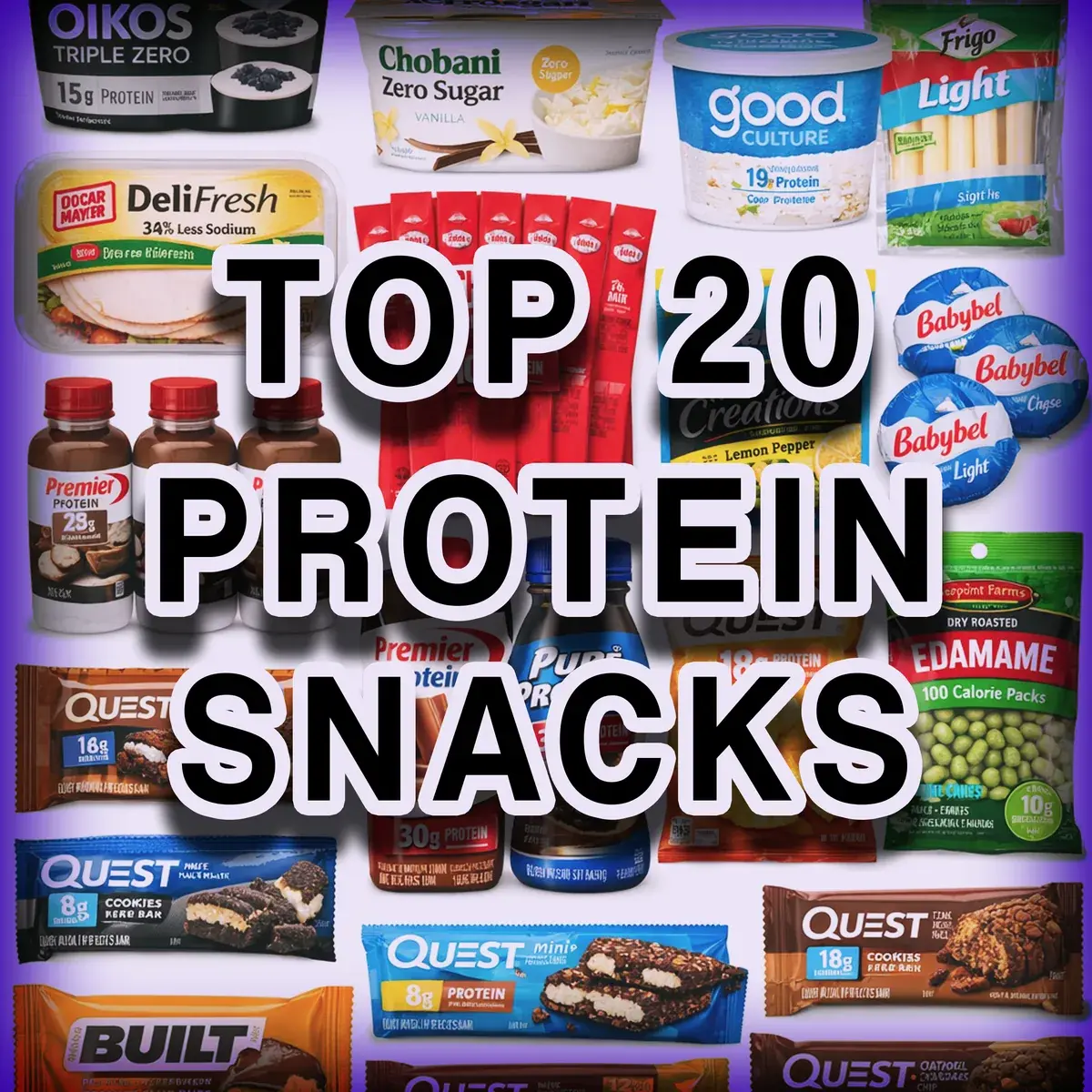
20 high protein snacks that are actually worth eating Dairy cups and other chilled picks
- Oikos Triple Zero Vanilla Nonfat Greek Yogurt Pack, 4 Ct, 5.3 OZ Cups
- About 15 grams of protein for roughly 90 to 100 calories depending on flavor. This is one of the easiest sweet options to fit into a cut without wasting calories.
- Chobani Zero Sugar Vanilla 4-Pack
- 11 grams of protein and 60 calories per cup. It is not the highest protein number here, but the calorie efficiency is excellent.
- Oikos Pro Vanilla Yogurt-Cultured Ultra-Filtered Milk Product Pack
- 20 grams of protein and 130 calories per cup. Better when a lighter yogurt does not hold you long enough.
- :ratio Protein Dairy Snack, Vanilla
- 25 grams of protein and 170 calories. Not the leanest yogurt-style option, but very strong when you need something that feels closer to a mini meal.
- Good Culture Cottage Cheese 5.3 oz
- The low-fat 5.3-ounce cup is listed at 19 grams of protein and 120 calories. It is one of the best-value snacks on the list.
Low calorie cheese, meat, and seafood options
- Frigo Cheese Heads Light String Cheese
- 6 grams of protein and 50 calories per stick. Not huge protein, but very easy to pair with fruit or vegetables without blowing calories.
- Mini Babybel Light Snack Cheese
- 5 grams of protein and 50 calories. Similar job to light string cheese, with built-in portion control.
- Oscar Mayer Deli Fresh Oven Roasted Turkey Breast with 34% Lower Sodium
- 9 grams of protein and 50 calories per 2-ounce serving. Great for fast roll-ups with mustard, pickles, or lettuce.
- Chomps Original Turkey Jerky Meat Snack Sticks 10-Pack
- 12 grams of protein and 80 calories per stick. One of the better car, work, or gym bag snacks.
- StarKist Tuna Creations Lemon Pepper Pouch
- 16 grams of protein and 80 calories. Hard to beat on pure protein-per-calorie, especially for a shelf-stable option.
- Seapoint Farms Dry Roasted Edamame 100-Calorie Snack Packs
- 10 grams of protein and 100 calories per snack pack. A genuinely useful crunchy plant-based option.
Ready-to-drink options that are actually lean
- Premier Protein Shake Minis, Chocolate, 12 Pack
- 22 grams of protein and 120 calories. This is one of the better emergency snacks for busy days.
- Premier Protein Shake, Chocolate, 12 Pack
- 30 grams of protein and 160 calories. More like a meal bridge than a tiny snack, but still very efficient.
- Pure Protein Chocolate Protein Shake, 12 Pack
- 30 grams of protein and 140 calories on the official product page. This is one of the leanest ready-to-drink picks on the list.
Crunchy and sweet options that still make sense
- Quest Nacho Cheese Tortilla Style Protein Chips
- 18 grams of protein and 150 calories per bag. Good when what you really want is chips, not yogurt.
- Quest Crispy Cookies & Cream Hero Protein Bar
- 18 grams of protein and 150 calories. A better-than-average bar when you want something candy-like without fully turning it into candy.
- Quest Mini Cookies & Cream Protein Bars
- 8 grams of protein and 80 calories. These work well when a full bar feels excessive.
- BUILT Peanut Butter Cup Puff
- 17 grams of protein and 150 calories. A solid sweet option when you want dessert energy without dessert calories.
- Pure Protein Cocoa Pebbles Protein Bars
- 20 grams of protein and 180 calories. Slightly higher calorie than the leanest picks, but still reasonable for a bar.
- Quest Oatmeal Chocolate Chip Protein Bars
- 20 grams of protein and 180 calories, plus 14 grams of fiber on Quest's product page. Better as a substantial snack than a casual nibble.
Best snacks by situation
For work, the winners are the ones that are tidy and easy to portion. Greek yogurt cups, cottage cheese cups, light cheese, and Quest Mini bars usually work best there. For the car or a gym bag, shelf-stable picks like Chomps, tuna pouches, edamame packs, and Premier Minis are much more practical.
For late-night hunger, dairy tends to win. Oikos Triple Zero, Chobani Zero Sugar, Oikos Pro, and cottage cheese are usually more filling than a bar for the same or fewer calories. For sweet cravings, the better moves are yogurt cups, Quest Minis, or a BUILT Puff. For salty cravings, Quest chips, tuna, turkey sticks, and edamame make more sense than pretending popcorn or crackers are a protein snack on their own. If late-night snacking keeps ambushing your week, build one of these into your meal-prep plan.
How to build a snack that actually keeps you full
A repeatable formula beats random snacking.
A good default is:
- lean protein + fruit
- lean protein + crunch
- dairy + berries
- turkey or tuna + pickles or raw vegetables
- light cheese + something bulky and low calorie
Protein helps, but pairing it with some food volume usually keeps you fuller. Try a yogurt cup with berries, cottage cheese with cucumber slices, or turkey roll-ups with pickles instead of a bare protein bar.
Fat can help with satisfaction, but it is also where calories climb fast. That is why lower-fat dairy and lean meat tend to work so well during fat loss. They let you push protein up without pushing calories up just as fast.
Snack ideas for different goals
For aggressive fat loss, keep the rotation very lean. Chobani Zero Sugar, Oikos Triple Zero, tuna pouches, turkey slices, Chomps, and light cheese are hard to beat.
For a slower, more sustainable cut, you can widen the range a bit. Oikos Pro, Good Culture cottage cheese, Seapoint edamame, Premier Minis, and Quest chips all fit well.
For muscle gain without mindless snacking, the better play is slightly bigger, still-controlled options like :ratio, Premier classic shakes, Pure Protein shakes, or higher-protein bars that stay around 150 to 180 calories.
For maintenance, the easiest system is a short rotation. Keep two sweet defaults, two savory defaults, and one shelf-stable emergency option. That removes a lot of decision fatigue.
The bottom line
Choose snacks by their calories, useful protein content, and how easily they fit your routine. A protein claim on the front of the package is not enough.
FAQ
What snack has the most protein for the fewest calories?
On this list, the leanest ratios come from shelf-stable tuna and some ready-to-drink shakes. StarKist Tuna Creations Lemon Pepper gives you 16 grams of protein for 80 calories, while Pure Protein's chocolate shake gives you 30 grams for 140 calories.
Are protein bars good for fat loss?
They can be, but they are usually best treated as convenience food, not the foundation of your plan. The leaner bars here sit around 150 to 180 calories with 17 to 20 grams of protein, which is decent, but yogurt, cottage cheese, tuna, and turkey often do a better job for fullness.
Is jerky a good high protein snack?
Some jerky is. Chomps Original Turkey is a good example because it gives you 12 grams of protein for 80 calories. The catch is that jerky-style snacks are often more sodium-heavy than dairy or fresh meat, so they are best used for convenience, not every single snack.
What should I eat when I want chips but need protein?
Quest protein chips are the most direct answer. Dry-roasted edamame is another good option when you want crunch but also want better ingredients and more fiber.
How many high protein snacks should I eat in a day?
There is no magic number. Use them to fill gaps, not as a free-for-all. If your meals already cover your protein and hunger is controlled, you may not need many snacks at all.
A simple next step is to build a five-snack rotation for the week:
- two sweet options
- two savory options
- one shelf-stable emergency option
That is usually enough variety to make fat loss easier without turning your pantry into a supplement store.