
On this page
If your band workouts leave you tired but you have no idea whether you're getting stronger, start by making the setup repeatable. Use the same band, grip, foot position and range of motion. Then record the reps you actually perform. Without those details, an extra five reps might mean you improved, or it might mean you gave yourself more slack.
Bands can build muscle. The 2026 ACSM review includes elastic-band training among the methods that improved muscle size compared with no training. To keep progressing, you need a way to judge the work and adjust it as you get stronger.
The band color isn't the whole load
If I pick up a 25-pound dumbbell today, it's still a 25-pound dumbbell next week. A band gives me a few more ways to accidentally change the exercise.
Take a standing curl. Moving your feet farther apart takes up more band. Holding it farther down changes the length you have available to stretch. Starting with slack lets you move through part of the rep before much resistance develops. You could use the same black band for both sessions and perform noticeably different exercises.
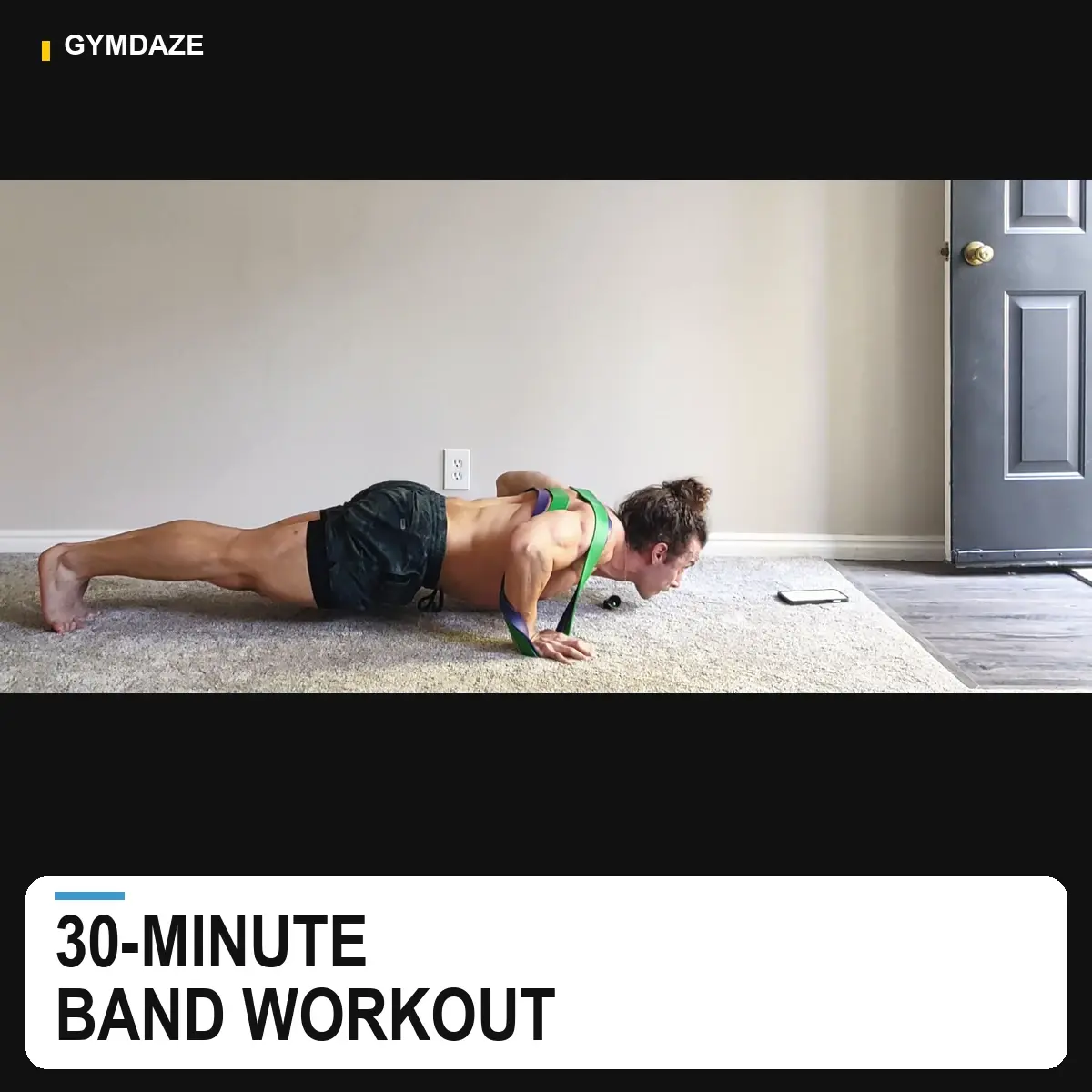
In the video, I use a band skull crusher to show how I keep track of this. I count how many hand turns I take into the band and pay attention to where it sits across my back. That gives me something I can recreate. Your reference might be a grip point, a floor mark for your feet or a measured distance from an anchor.
Write enough that you can set it up again without guessing. If you use an anchor, include its height and your distance from it. Inspect the band and attachment before loading them, and follow their intended setup and stretch limits. A worn band or an improvised anchor isn't worth keeping just to preserve your workout log.
A timer can't tell you how hard the set was
Forty seconds could contain eight demanding reps or twenty-five hurried ones. The duration alone doesn't tell you the resistance, range of motion or how many more reps you could have done.
Timed workouts can still be useful. I have a thirty-minute band session you can follow. But matching the person on screen isn't a reason to use a band that's too easy, cut the movement short or rush into the next exercise before you're ready.
If you're training for muscle, choose resistance that makes the later reps demanding while you can still perform the intended movement. You don't need every set to end in complete failure. The ACSM review didn't find that training to failure consistently improved muscle growth.
Use the clock to organize the session or time your rest, and keep a separate record of your sets. If a circuit's pace prevents you from doing the exercises well, pause the video.
Keep an exercise long enough to learn something
Trying a new curl every week can be fun. It also makes your results hard to compare, especially if the band and setup change with it.
Pick a few movements you can perform comfortably in the space you have. In the video, I suggest a hinge, a squat, a row, a press and a couple of smaller exercises for the muscles you want to emphasize. That's a way to organize your choices, not a requirement to use six exercises in every session.
Repeat them long enough to see what happens. You can still replace an exercise that doesn't suit you. Just give the replacement its own starting point instead of treating its rep count as an improvement over a different movement.
What I would put in the log
For the skull crusher example, the entry would identify the exercise, band, grip and position across my back. Then I'd record each set separately. In the video I use a target of three sets of 10–20 reps to explain this. You can choose a different range for the exercise you're doing.
| Session | Set 1 | Set 2 | Set 3 | Setup |
|---|---|---|---|---|
| Example first session | 17 | 14 | 12 | Same band, two hand turns, same back position |
| Example later session | 18 | 15 | 14 | Setup and execution unchanged |
Those are illustrative numbers. As I point out in the video, improving every set that much could be a big jump if the first session was already hard. Adding one controlled rep to one set would still give you something useful to record.
Once you're reaching the top of your chosen range across the sets, make a small increase in resistance and write down the new setup. That could mean a stronger band, an additional band or a shorter usable length, within the equipment's limits. Expect the rep count to drop. You're now comparing future sessions against that new setup.
Change one part of the setup at a time where possible. If you change the band, exercise, grip, rep speed and rest all at once, you won't know which change accounts for the result. The progressive overload guide explains the same idea with other equipment.
When a different piece of equipment makes sense
Bands have awkward spots. The jump between two bands can be large, and an exercise can become difficult at one part of the movement while feeling easy elsewhere. Sometimes a dumbbell or cable makes the load easier to adjust. You don't have to force every movement into a band version.
If you need help choosing equipment, the resistance band guide covers the options. For your next workout, though, you can start with what you already own: choose one exercise, record its setup and do the same thing next time. That gives you a useful comparison before you buy anything else.
Common questions
Frequently asked questions
Can I build muscle with timed resistance band workouts?
Yes. Timed sets can provide useful resistance training. Record the band, setup and reps as well as the duration so you can judge effort and compare sessions. Pause a follow-along when you need more rest or time to set up.
References